
Resources · Why visual
The team planned to build this on thermal cameras. A rainstorm in Midland changed their minds.
Everyone assumes a leak detector should see heat. Casey and Kaylor did too, until they put two thermal cameras and two visual PTZ cameras on the same trailer, poured water on the same dirt, and watched what each one could and could not see. This is that story, and the reasons they have never regretted the choice.
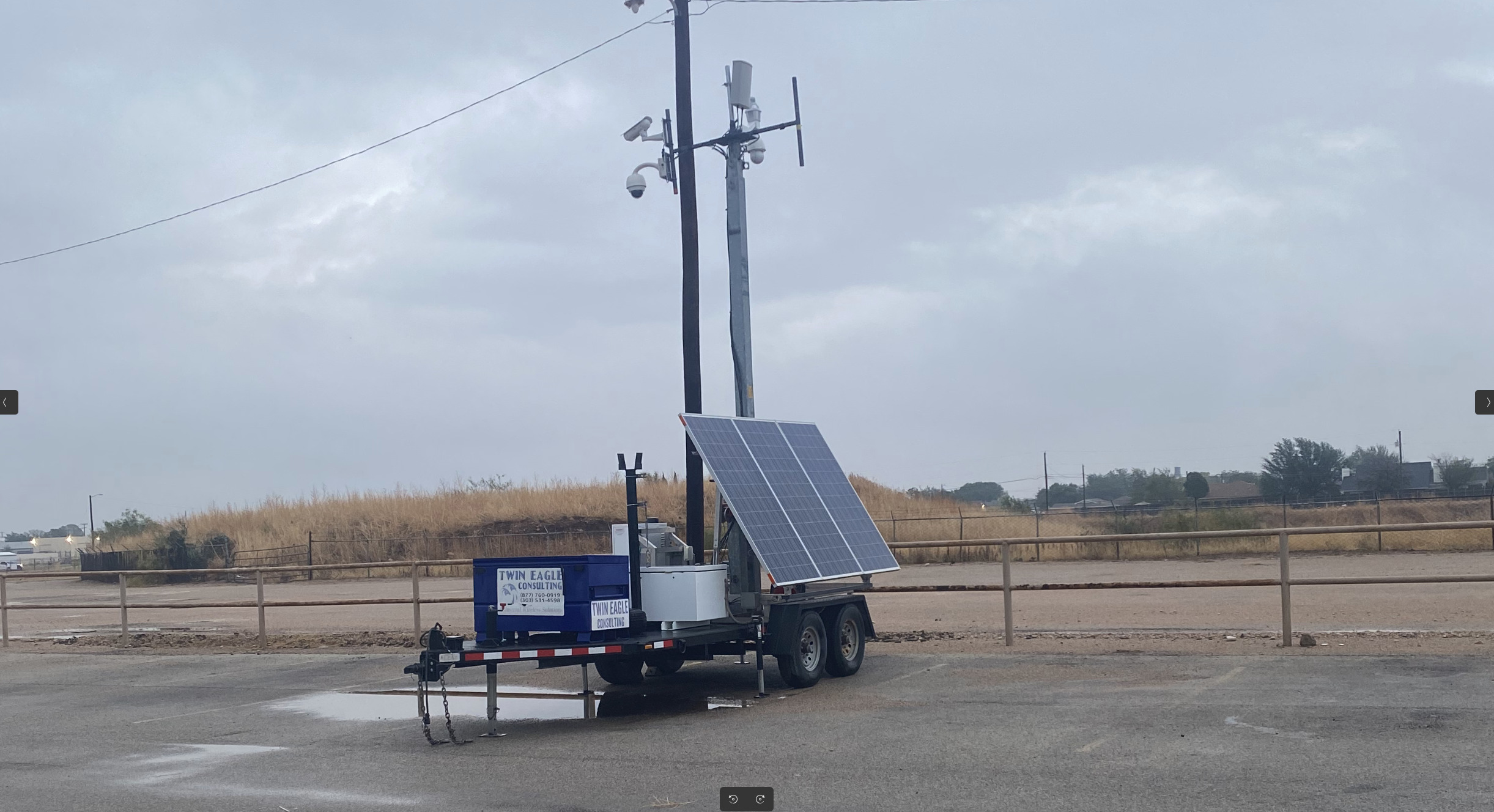
The second chance
In 2022, before VisionAery was its own company, the team at Twin Eagle Solutions was commissioned by Phillips 66 to build a liquid leak detection system for its sites. It was not the team's first attempt. An earlier pilot had tried to find leaks with a camera's motion detection, and it did not work. Kaylor told the Phillips 66 team that if they gave his team another chance, the team would build them something phenomenal.
They agreed. Casey and Kaylor started planning a system from the ground up, and both were sure of one thing: the right sensor was a thermal camera. Liquids have a temperature. Thermal cameras see temperature. The logic seemed obvious.
They decided to test every option anyway, because the last result had been embarrassing enough that nobody wanted to assume again.
The test: thermal versus visual cameras on wet ground
Casey and Kaylor met at the Twin Eagle office in Midland-Odessa, because it has a large dirt parking lot where they could make puddles and point cameras at them. About fifteen minutes after they landed at the Midland airport, a monsoon-type storm hit, and the roads to the office were close to flooded. Kaylor is a believer in God and Jesus Christ, and he says plainly that the storm was not luck. It was divine intervention, one of several along the way: God put the hardest condition a leak detector has to survive, ground that is already wet, in front of them on the first day, before they could build the wrong thing.
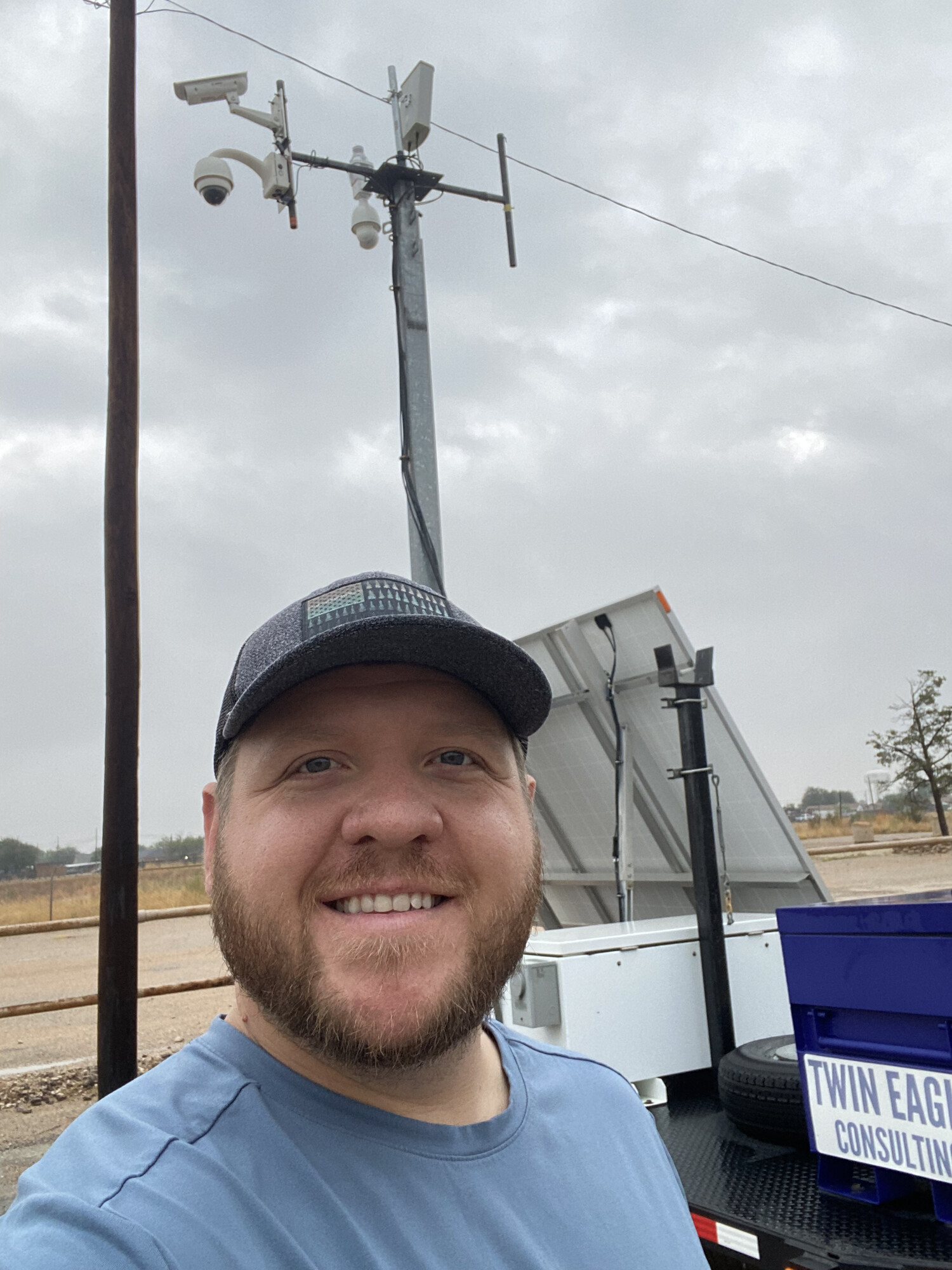
They bought a 100-gallon water tank, filled it, and mounted the cameras on a camera trailer: two thermal cameras and two visual PTZ cameras, all looking at the same ground. Then they started pouring.
What the thermal cameras saw. With liquid already on the ground, the thermal cameras were close to blind. Damp ground under a dry surface changes the surface temperature, so areas with no spill at all showed a signature, and the places where they had just poured water looked very much like the places where they had not.
The hot-water trick. Kaylor was not ready to give up on thermal. Thermal cameras see temperature, not color, so the team switched to hot water to give the camera something to see. It worked, briefly. The spill showed clearly for a short time, then spread, cooled toward the ground temperature, and disappeared into the same damp signature as everything around it.
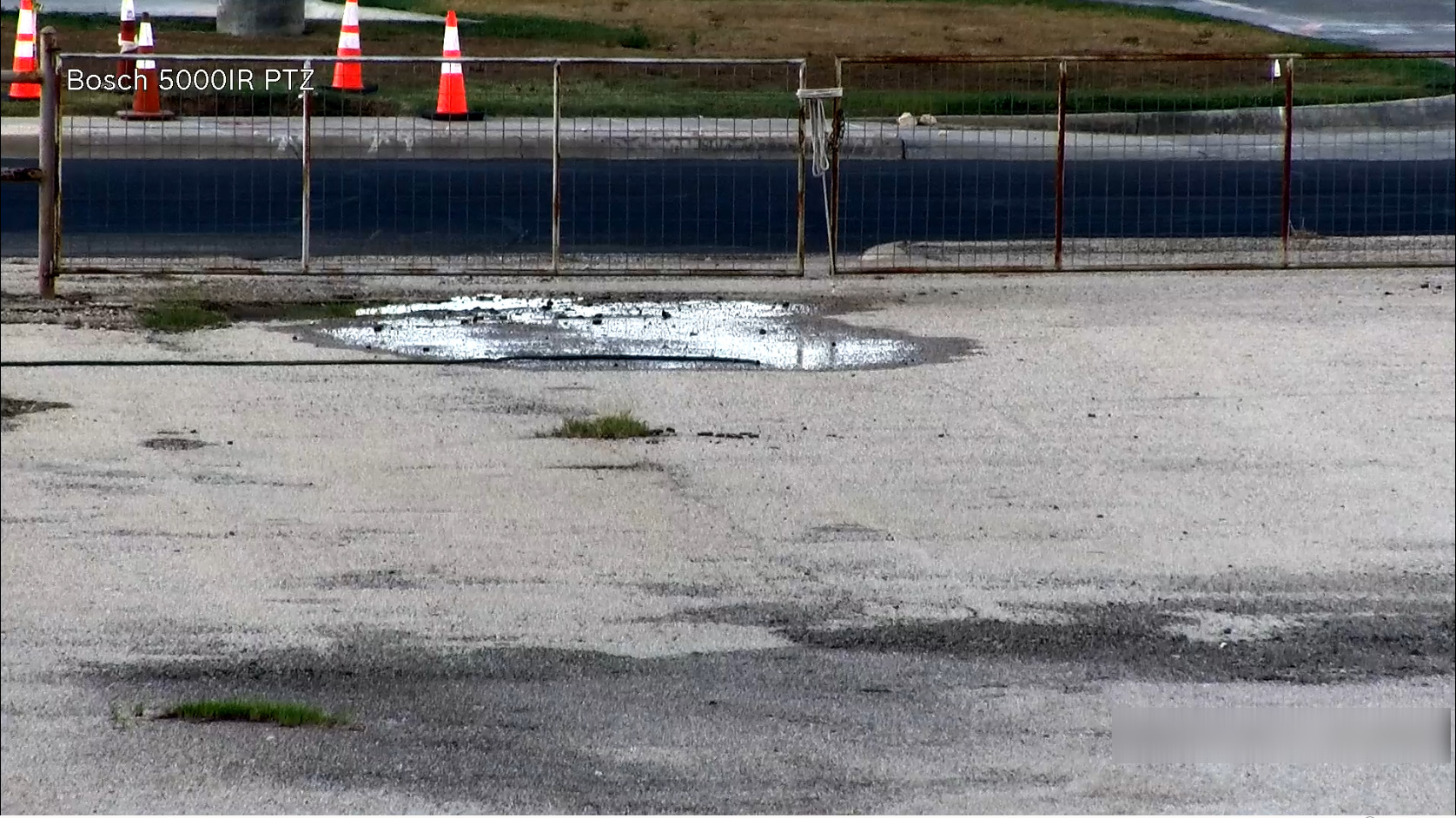
What the visual cameras saw. The two PTZ cameras showed the puddles crisply against damp ground from the start. A puddle has a shape, an edge, a color and a sheen, and all four are visible in an ordinary image.
The days after. This was the part that settled it. Over the next few days the puddles dried, and the visual cameras no longer saw them. The ground was clear again, which means a new puddle would stand out the moment it formed. The thermal cameras still saw the damp ground, days later. A detection model on thermal would have had to tell real puddles from wet ground that looks the same and stays for days. On visual, the playing field reset itself.
Casey and Kaylor flew home convinced. The system would be built on visual cameras.
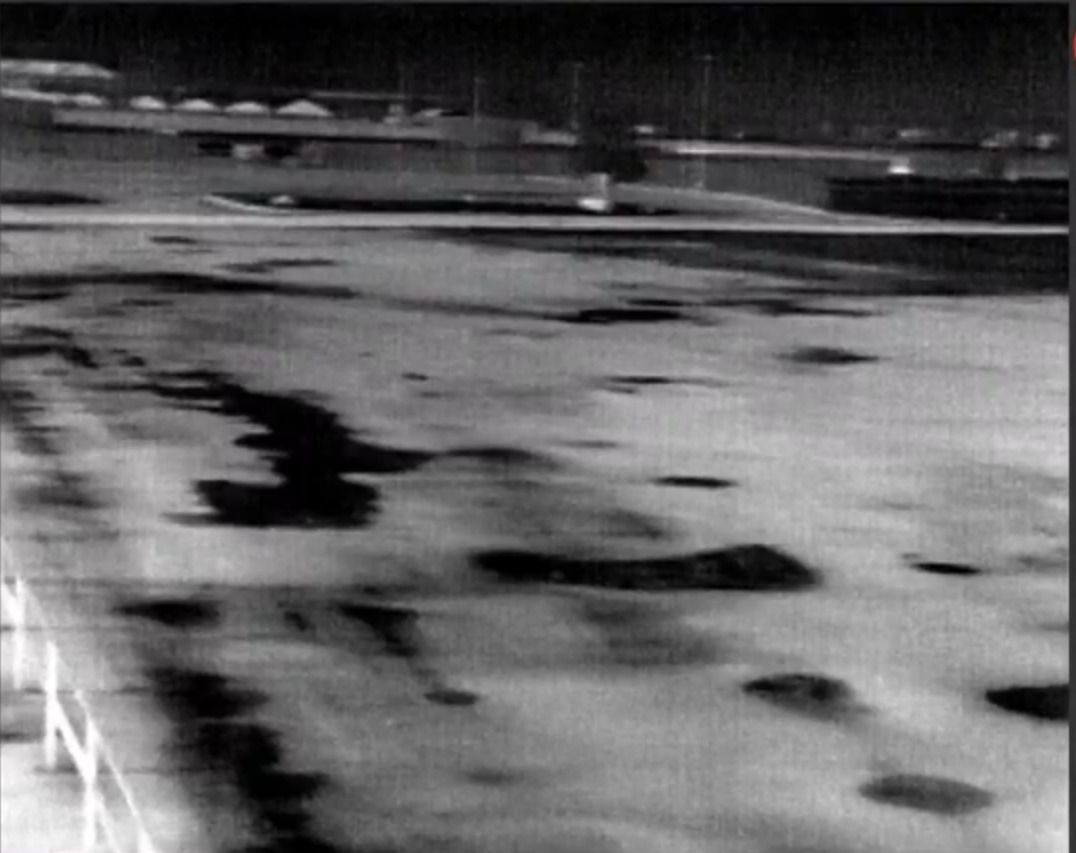
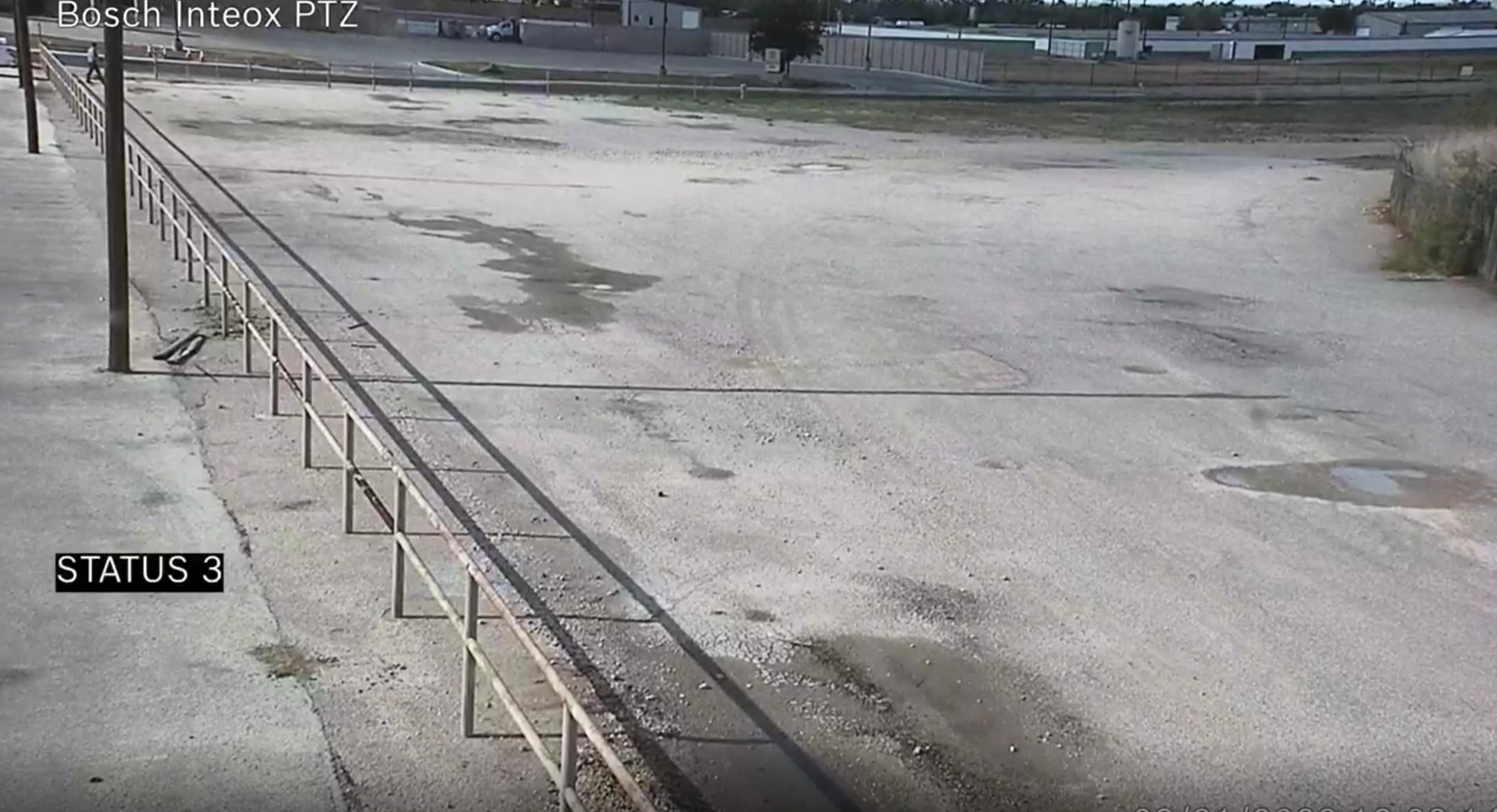
Same ground, same minute: the thermal frame and the visual frame.
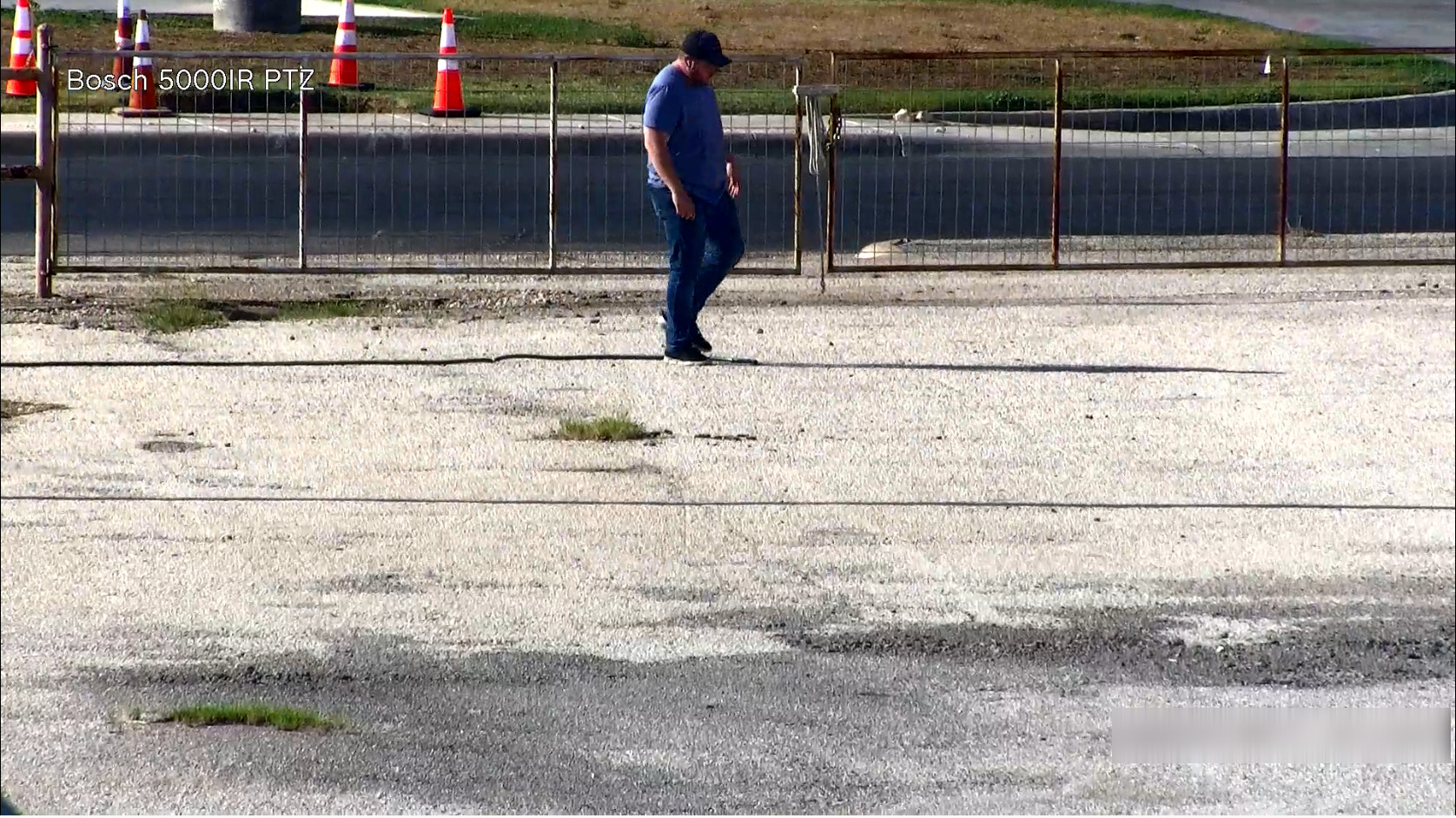
What the team learned about thermal and visual leak detection
Everything since has supported the choice.
Thermal measures one thing. Temperature. A leak that is at ground temperature is invisible to it, and a leak that starts hot becomes invisible as it spreads. A visual image carries shape, color, sheen, edge and growth, which gives a detection model several independent ways to recognize a puddle, a spray or a visible vapor plume.
Thermal cameras are fixed by their lens. The field of view is set by the lens you buy, and a thermal PTZ is rare and costly. Visual PTZ cameras are ordinary, and most sites already have one on a pole. V4 binds detection zones to PTZ presets, so one camera watches a whole pad on a tour.
Zoom and pixels on target. Visual PTZ cameras commonly offer optical zoom and higher image resolutions than typical thermal cameras. That lets you frame a smaller area more tightly and put more pixels on the liquid you want to detect. Many thermal cameras use a fixed focal-length lens and lower-resolution sensors; thermal models with optical zoom exist, but it is not a standard capability across thermal cameras.
Thermal costs more, per pole, every time. Visual cameras are inexpensive. Not cheap, they are well-made industrial products, but a fraction of a thermal unit, and in most cases already installed. That is the difference between a project that adds hardware to every site and software that installs on the cameras a site already owns.
Visual cameras already see at night. Industrial visual cameras carry near-infrared illuminators and switch to them after dark, so the same camera watches the pad day and night with no second sensor. V4 was trained on near-infrared frames as well as color, and the field results on the field performance page include nights. The one thing thermal was supposed to add, night vision, the visual camera already had.
Wet ground is normal. Rain, wash-down, dew and produced-water handling leave damp ground all the time. A detector that confuses damp with leaking will either alarm constantly or be turned down until it misses the real one. Visual detection, with a rain gate and a post-rain forgiveness window, lets the ground reset.
Where thermal still fits
Thermal cameras see what visual cannot: a fluid with no color and no sheen that does not wet the surface, or a release in total darkness with no illumination at all. Those cases are rare on a tank battery, where the fluids are crude, condensate and produced water and the cameras have near-infrared illumination, but they exist. For those, VisionAery can be paired with a thermal system. V4 is a visible-spectrum product and thermal streams are not a supported input; because it was trained on near-infrared frames as well as color, it has detected on thermal streams in some cases, but VisionAery does not sell it that way. The rest of the time, the camera on the pole is the right sensor, and it is already there.
Thermal and visual for liquid leaks, side by side
| Condition | Thermal camera | Visual camera with VisionAery |
|---|---|---|
| What it measures | Surface temperature | Shape, color, sheen, edge and growth of a liquid, spray or plume |
| A fresh puddle at ground temperature | Low or no contrast | Visible |
| A hot spill as it spreads | Visible briefly, then fades as it cools | Visible throughout |
| Puddle against damp ground | Hard to separate; damp ground carries its own signature | Separable: a puddle has an edge and a sheen, damp ground does not |
| After rain or wash-down | Damp ground stays visible for days | Ground reads clear once puddles dry; new puddles stand out |
| Pressurized spray and visible vapor | Only if the temperature differs from the background | Visible as spray and plume |
| Night | Yes, without illumination | Yes; the same camera switches to its near-infrared illuminator after dark, and V4 is trained on those frames |
| Colorless fluid that leaves no trace | Possible, if its temperature differs | Not visible |
| PTZ tours and presets | Rare and costly | Ordinary; zones bound to presets |
| Field of view | Many models use a fixed focal-length lens; optical zoom exists on some models | Optical zoom commonly available on visual PTZ cameras; frame a smaller area more tightly |
| Resolution and pixels on target | Typically lower-resolution sensors than visual cameras | Commonly higher image resolutions; more pixels on the liquid you want to detect |
| Cost per pole | A thermal unit per view | The camera already on the pole; software license per channel |
| Published price, benchmark, field results | Not published by the thermal vendors VisionAery reviewed | Pricing, benchmark, field performance |