
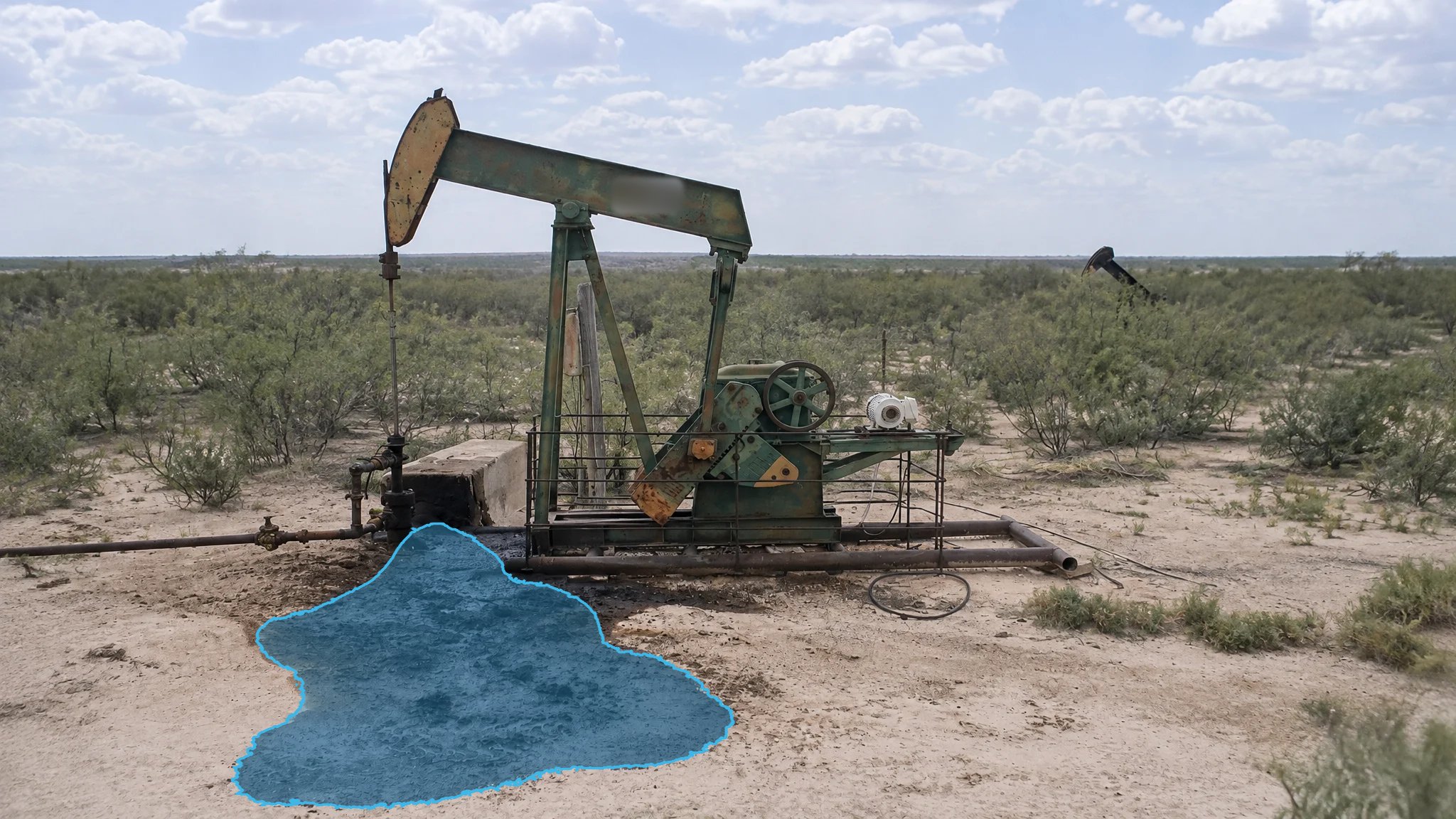
Oil and gas
Well sites, tank batteries, SWDs, pump and compressor stations, pipelines, terminals, refineries.
Crude, produced water and condensate on the pad; spray at seals and flanges; visible vapor at compressors.
See use casesIndustries
Oil and gas is where VisionAery Liquid Leak Detection was born. The same model, with no per-site training, watches for the same three signatures, puddles, pressurized spray and visible vapor, in every industry below. Pick yours to see the use cases, the cameras that already watch them, and where the alarms land.
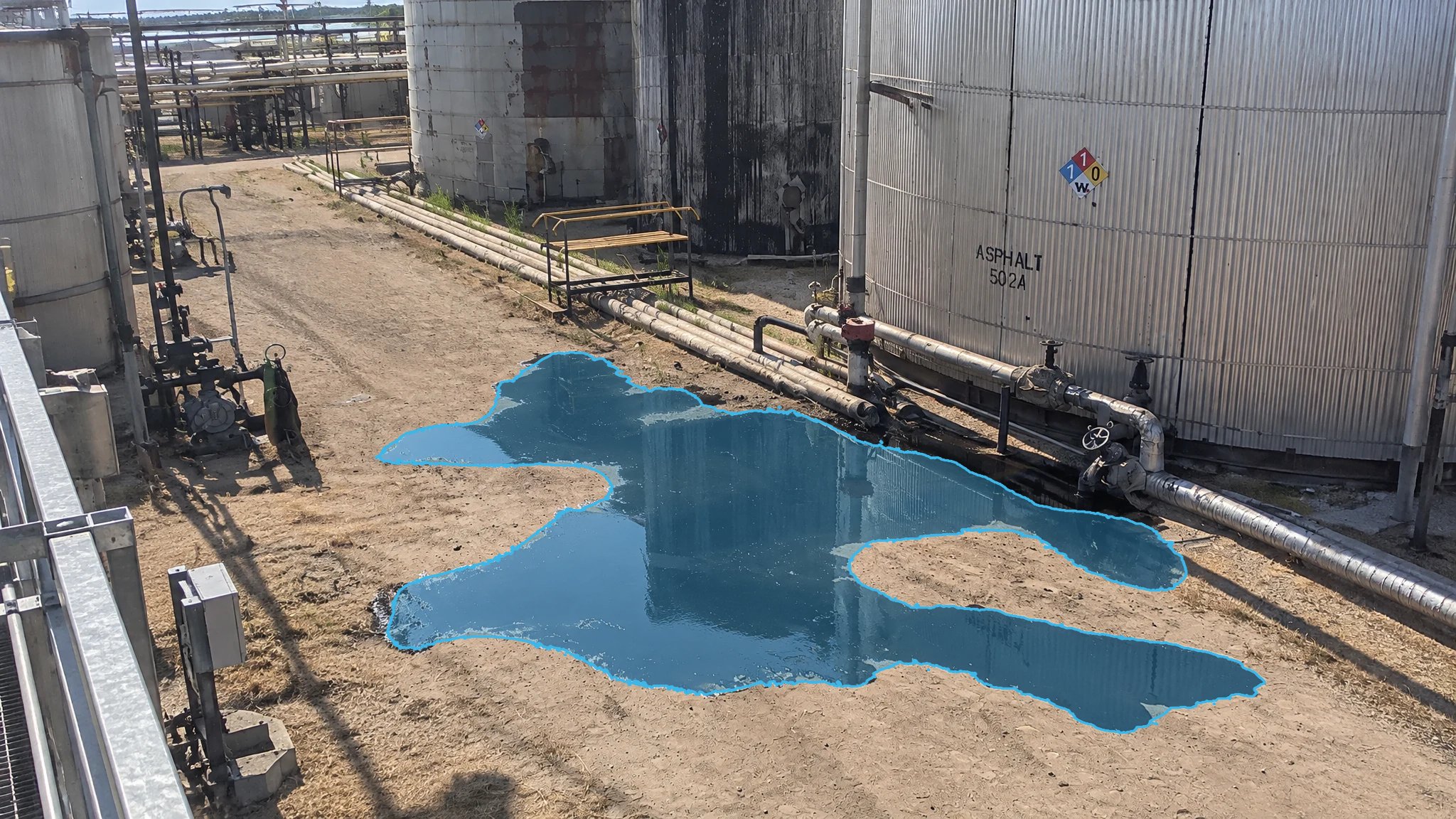
Well sites, tank batteries, SWDs, pump and compressor stations, pipelines, terminals, refineries.
Crude, produced water and condensate on the pad; spray at seals and flanges; visible vapor at compressors.
See use cases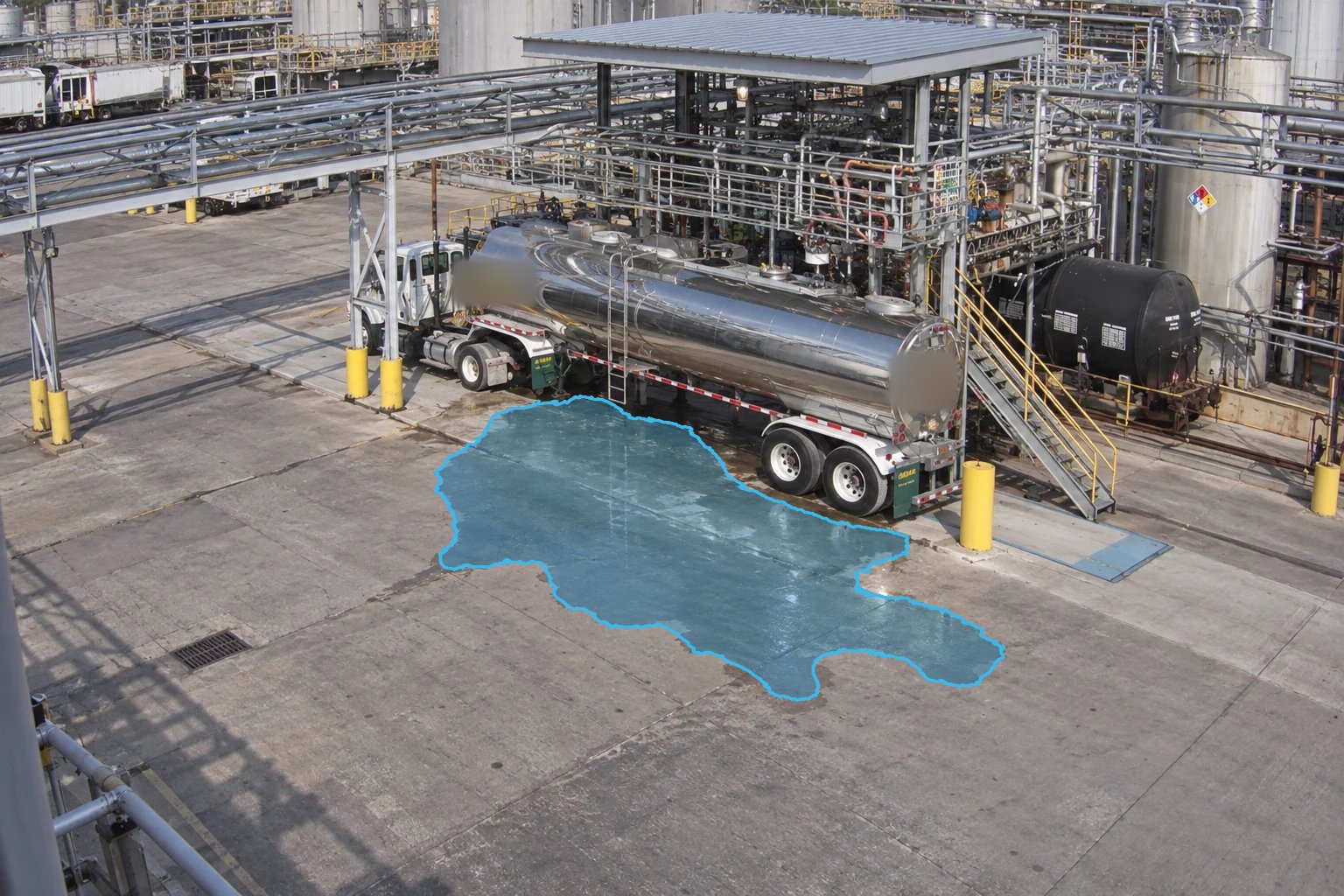
Tank farms, pump pads, loading racks, drum and tote storage, process units.
Acid, caustic and solvent puddles in containment and at transfer points; spray at flanges and seals.
See use cases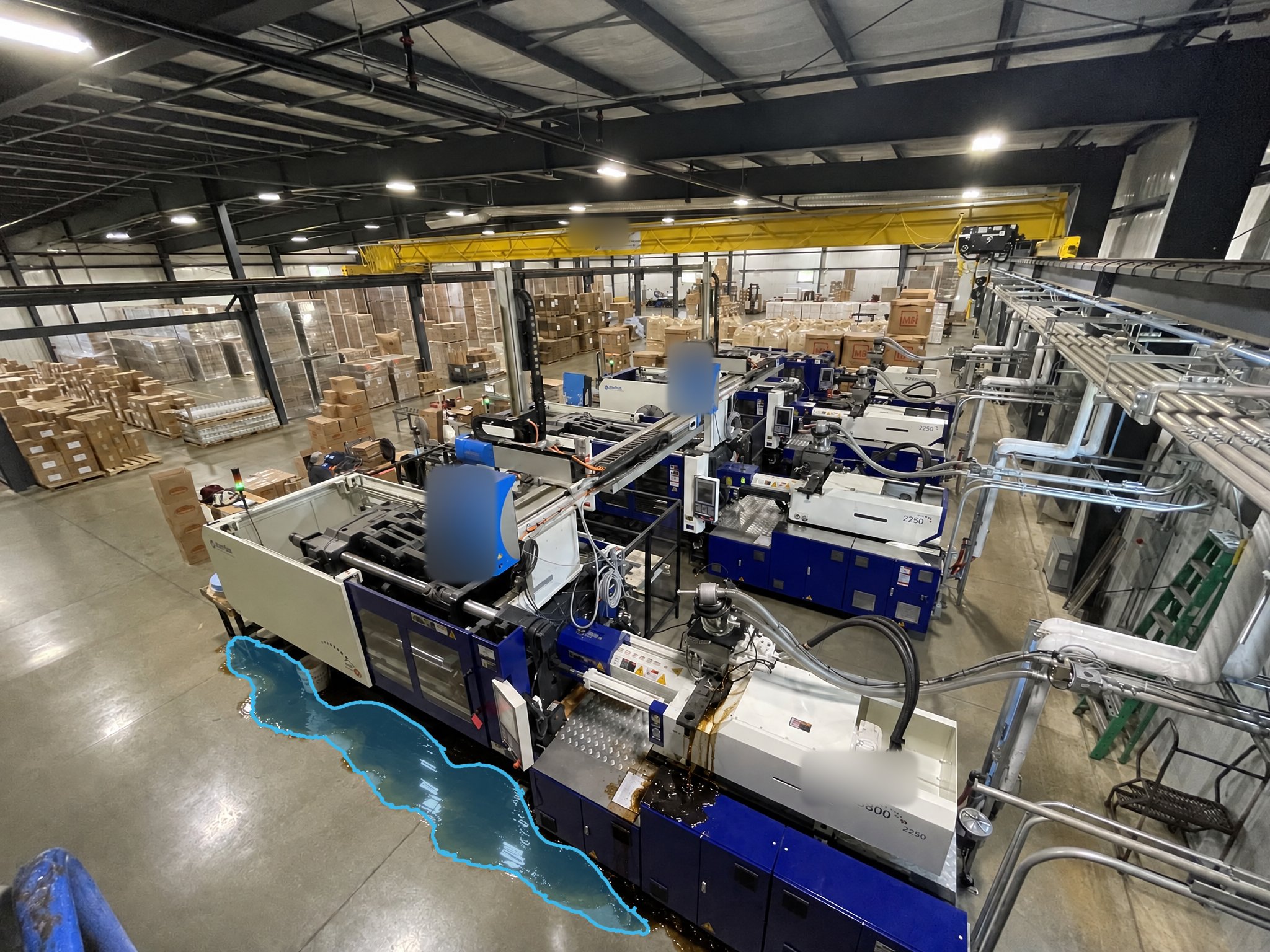
Machine floors, hydraulic systems, coolant loops, paint and wash lines, plant utilities.
Coolant, hydraulic and machine oil pooling under equipment; steam and refrigerant vapor at joints.
See use cases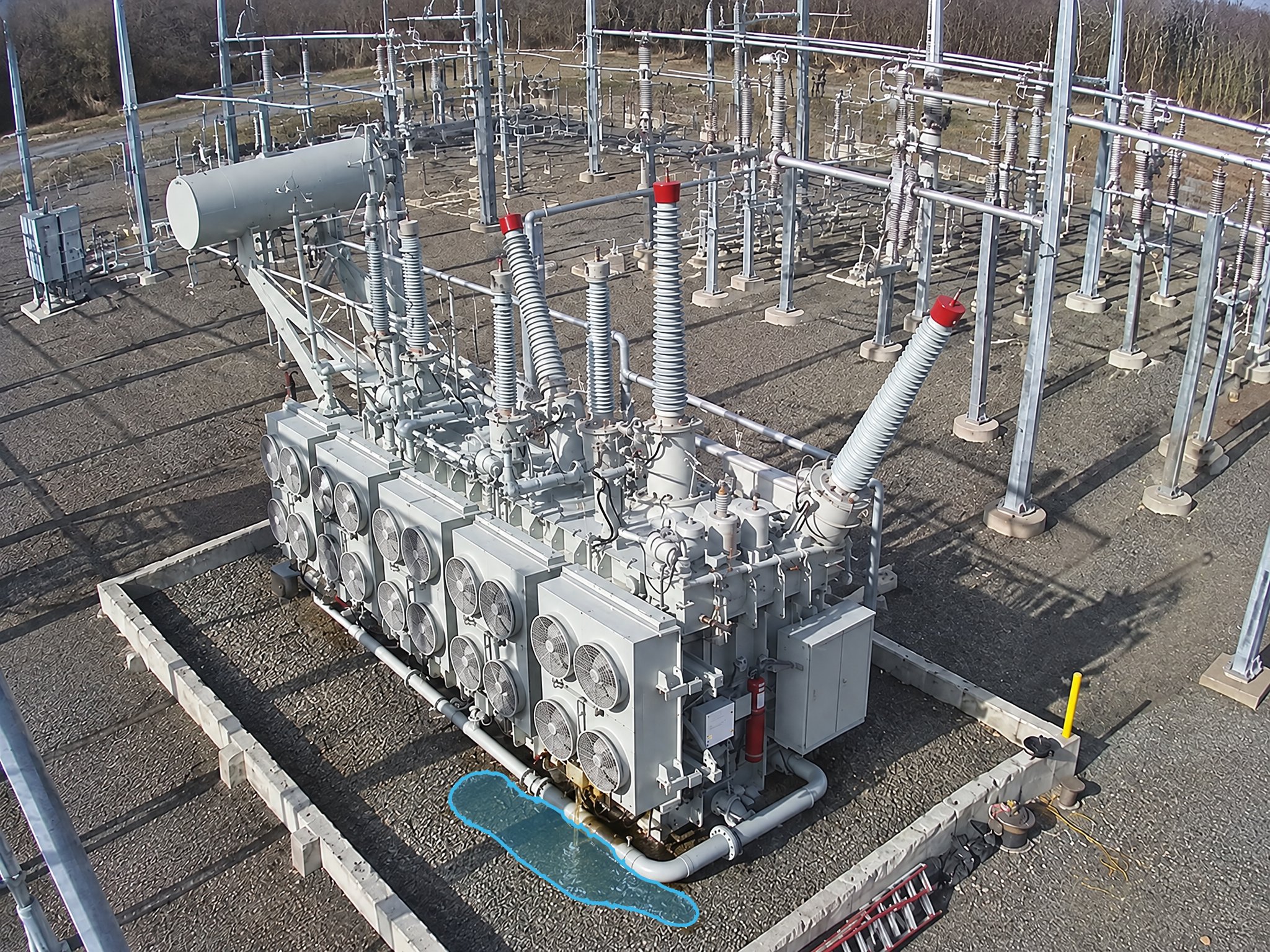
Remote transformer bases in transmission and distribution substations.
Visible puddles at transformer bases, on gravel, pads and dry containment floors. Liquid presence, not chemical identification.
See use cases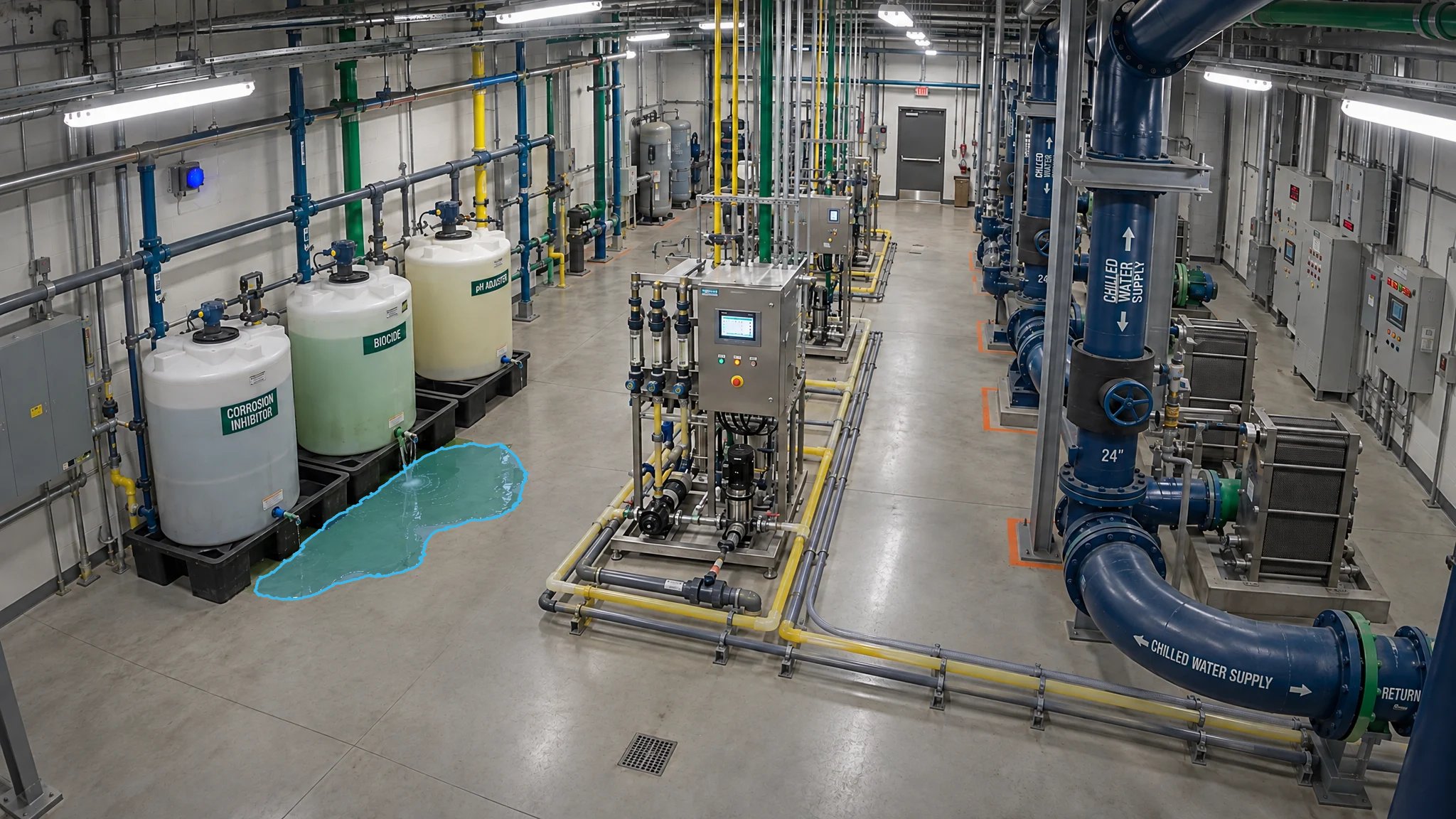
Treatment plants, lift and pump stations, chemical feed rooms.
Process water, sludge and treatment chemicals on walkways and floors; spray at pumps.
See use cases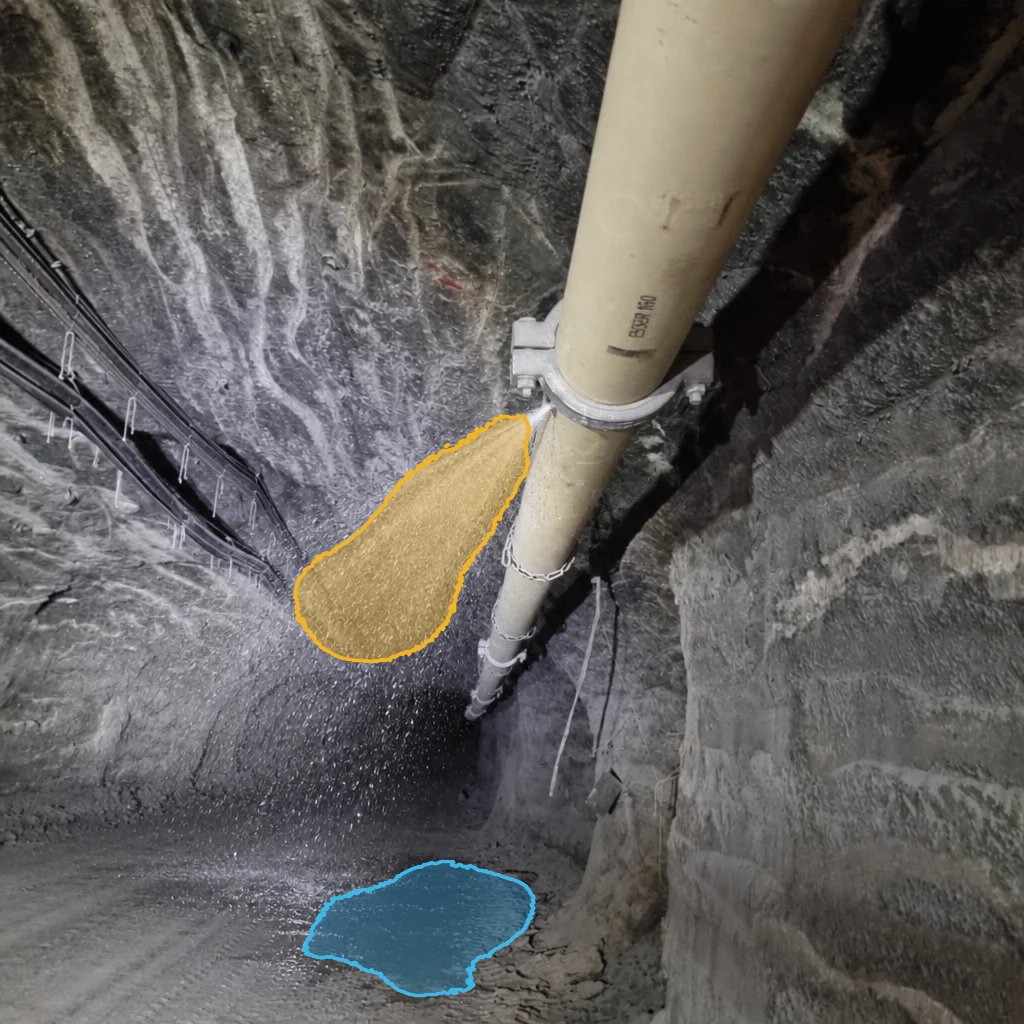
Process plants, slurry and tailings lines, truck shops, fuel farms.
Spray from pipe joints and pumps; puddles of slurry, fuel and hydraulic fluid.
See use cases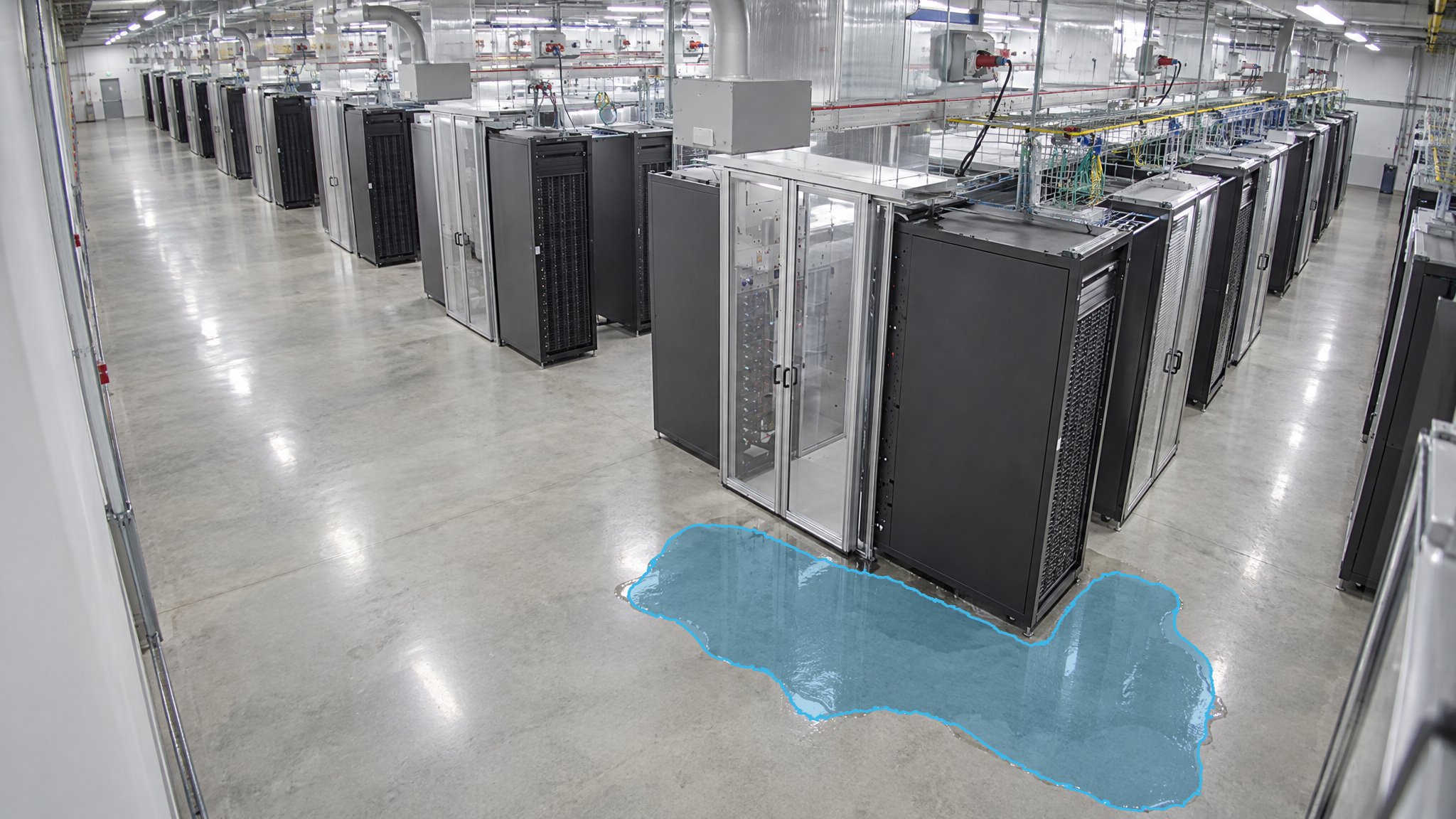
Chilled-water loops, CRAC and chiller rooms, liquid-cooling distribution, generator fuel systems.
Water, glycol and coolant on the floor before it reaches the racks; fuel at day tanks.
See use cases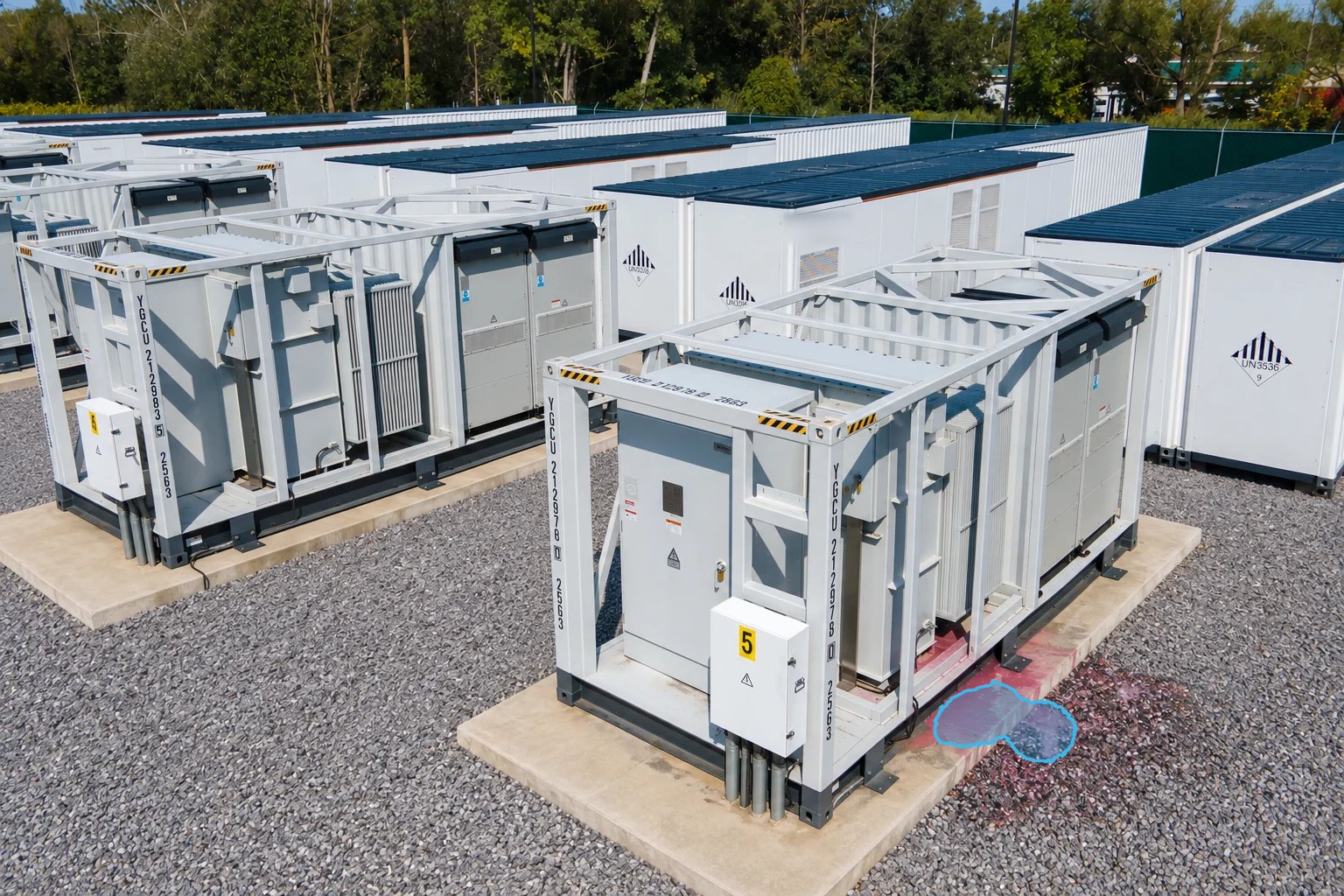
Container yards, inverter pads, thermal management skids, site substations.
Coolant, glycol and transformer oil pooling around enclosures and pads.
See use cases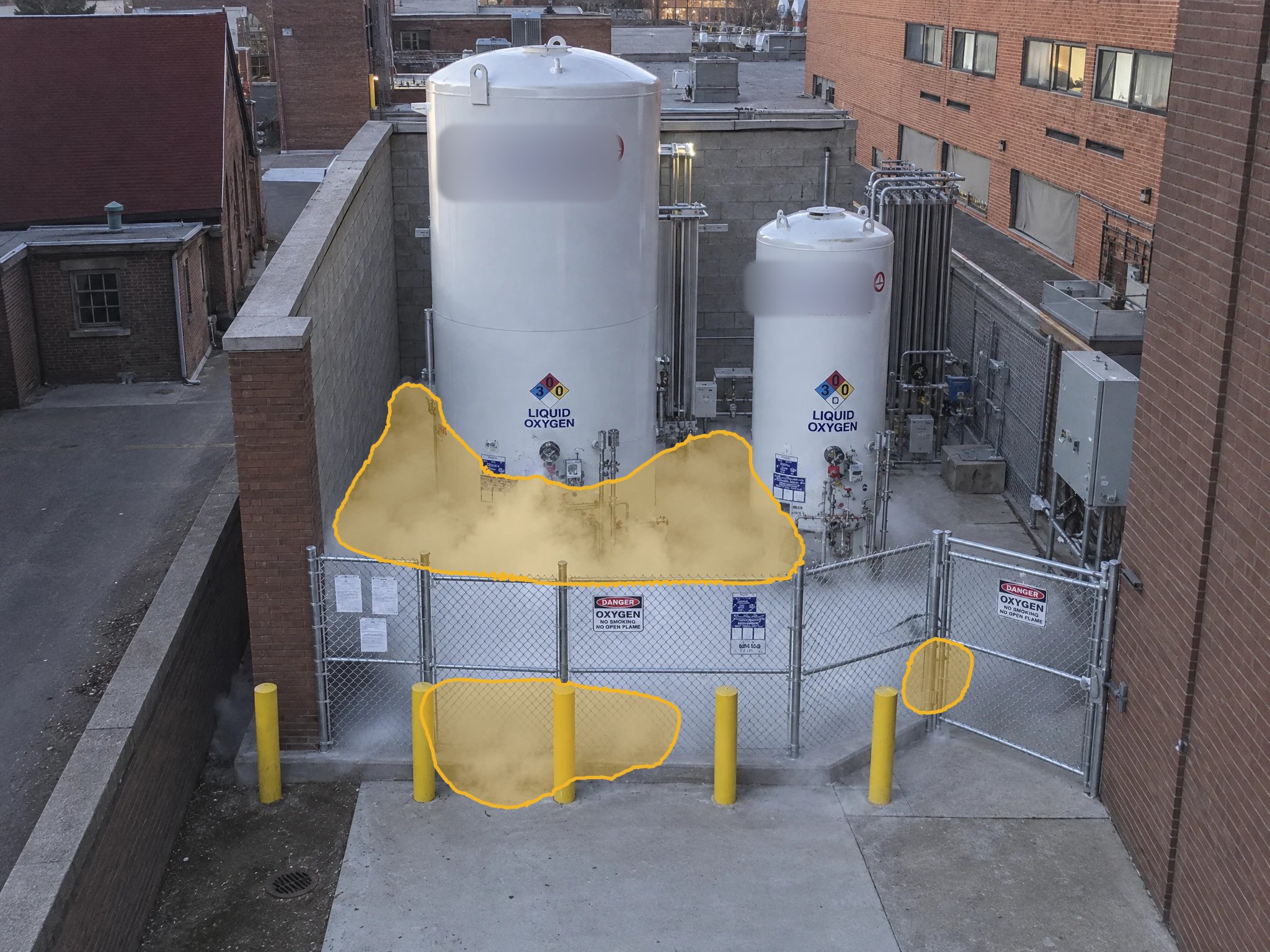
Central plants, bulk liquid oxygen, mechanical rooms, corridors and parking.
Visible vapor at cryogenic tanks; water and glycol in plant rooms; liquid on floors.
See use cases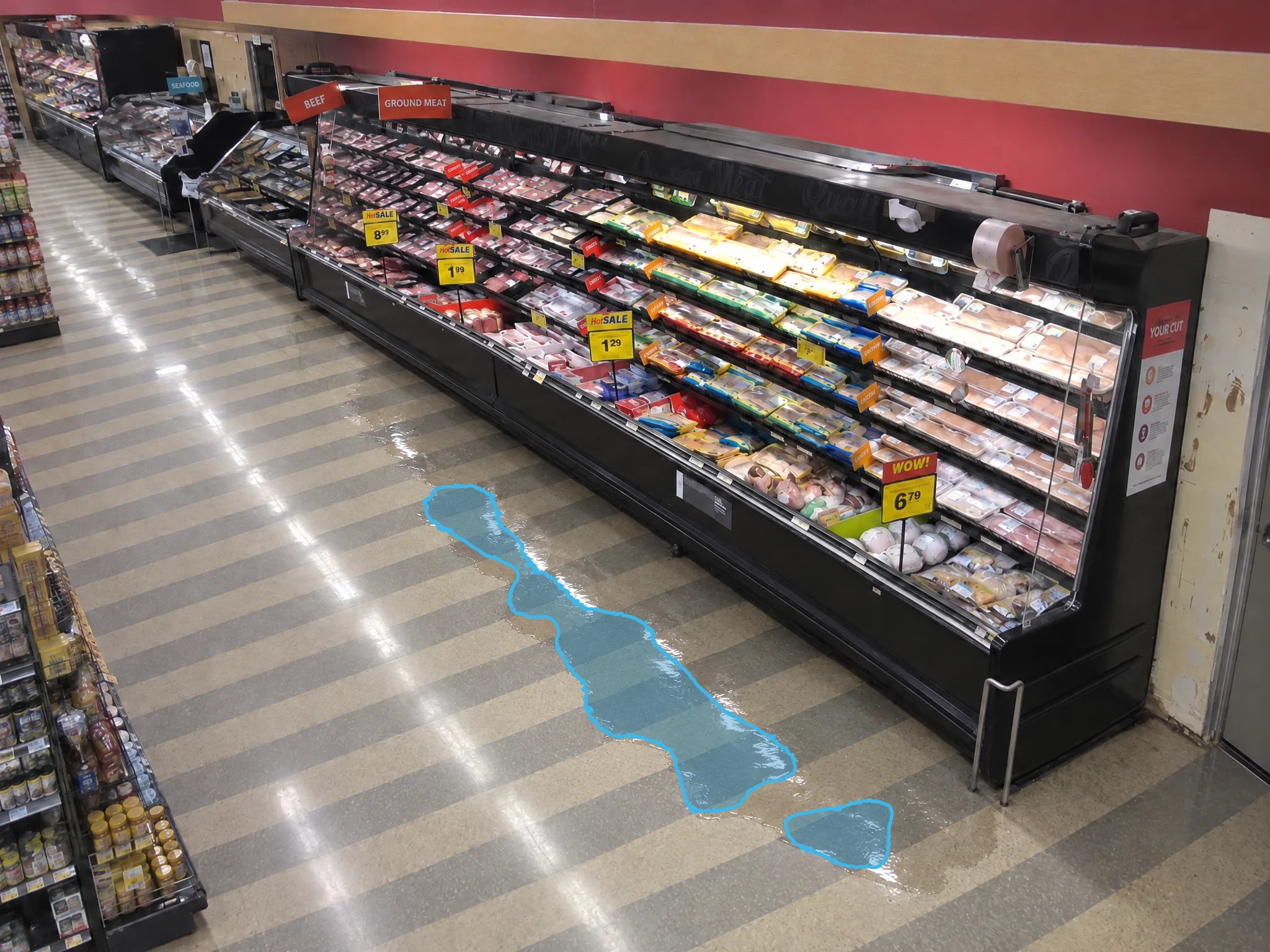
Grocery and big-box floors, fuel islands, car washes, loading docks, parking, offices and terminals.
Spills on floors, fuel on the forecourt, vehicle fluids on decks.
See use cases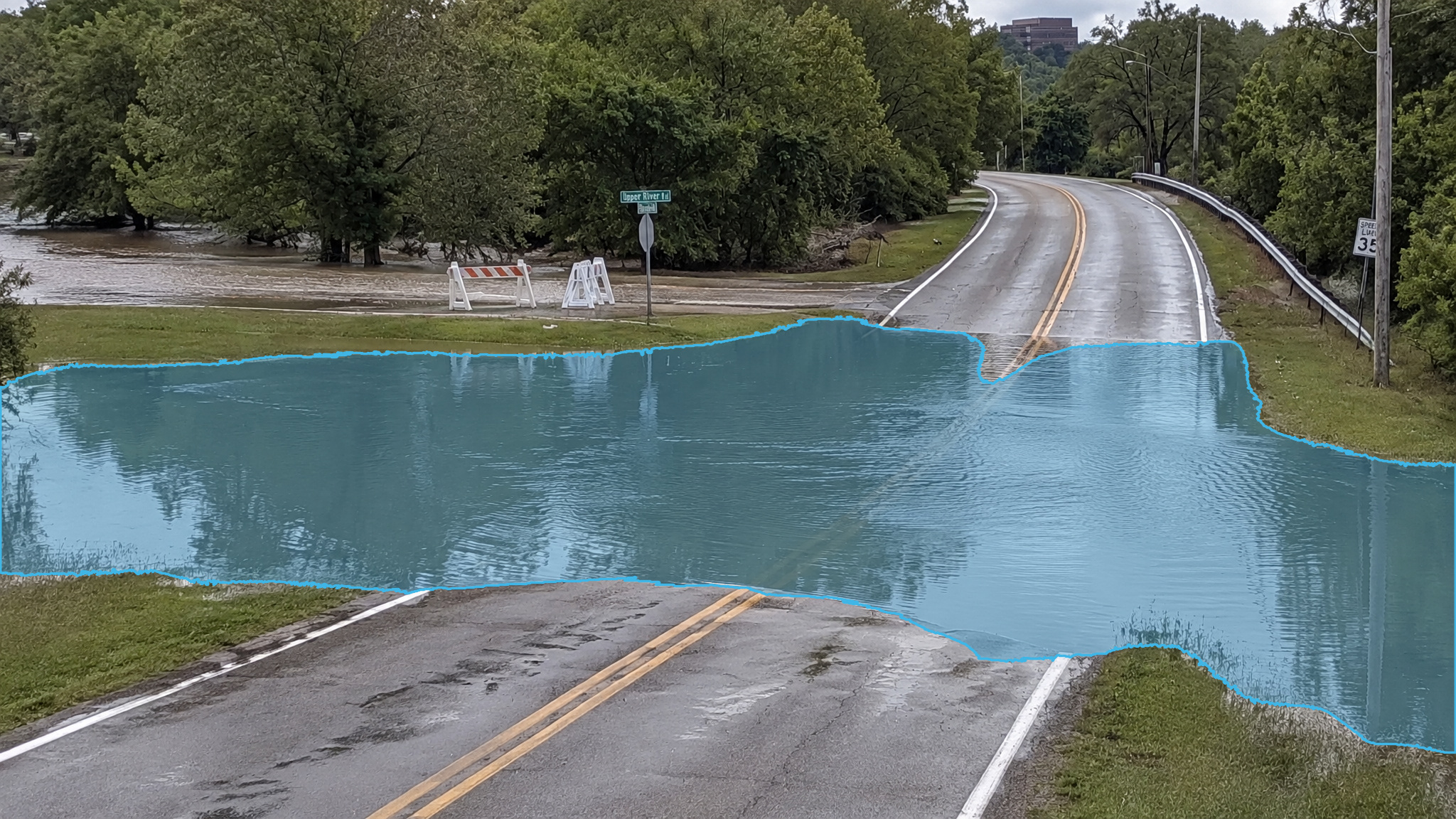
Road low points, sag curves, underpasses and low-water crossings.
Standing water appearing and growing in a traffic camera's view.
See use casesThe same model that watches an oilfield tank pad watches a grocery aisle. Install it, draw your zones, and it is detecting in under 30 minutes.
On-camera on Axis ARTPEC-9 and Hanwha Wisenet 9, or on-server from any H.264 RTSP camera. Nothing is processed in the cloud.
Native camera events into the VMS, MQTT as JSON or Sparkplug B into SCADA, webhooks to everything else. Every alarm carries a timestamp and the original and overlay snapshots.
| Detection class | Pixel-level F1 / Dice | Detection rate | False positive rate |
|---|---|---|---|
| Puddle | 0.889 | 97.1% | 0.8% |
| Spray and visible vapor | 0.923 | 98.1% | 3.7% |
Detection and false positive rates are frame-level measurements. F1 / Dice is calculated from pixel-level true positives, false positives and false negatives pooled across frames with human masks for each detection head. These are not operational alarm rates.
Scenarios outside those tested are not covered by these figures.
Read the Benchmark MethodologyDetection depends on the view, lighting and image detail. VisionAery Liquid Leak Detection does not identify chemical composition, detect invisible gas or measure concentration, depth or volume. It supports, not replaces, inspections, required instrumentation, cleanup protocols and safety procedures.